

Lately, I’ve talked a lot about the “Lead mindset.” But let’s get practical:
What does a Tech Lead actually do during the week that a Senior Engineer doesn’t?
It’s easy to get lost in meetings, but true technical leadership is exercised through high-leverage technical tasks.
Today, I want to focus on the two “power moves” that will make you stand out: Architecture Reviews and Strategic Tech Debt Management.
1. Architecture Reviews: From Gatekeeper to Facilitator 🏛️
Many engineers think an Architecture Review is about being the “smartest person in the room” who says “yes” or “no” to a design. Wrong.
A Lead uses reviews to:
Identify cross-team impacts: Does this change in the Monolith affect the new modular services we are building?
Teach trade-off analysis: Don’t just point out a flaw; ask the team, “If we choose this database now, how hard will it be to migrate in 6 months?”
👉🏼 Leadership here is about Architecture Incrementalism.
You aren’t looking for the “Final Perfect Version”; you are ensuring the team takes a step forward without creating a legacy nightmare tomorrow.
2. Tech Debt: Stop Complaining, Start Managing ⚖️
We all have technical debt. Let’s not complain about it but manage it.
👉🏼 Growing into leadership means moving away from “we should rewrite this” toward “we will improve this incrementally.”
Here is how you lead through debt:
The Debt Radar: Don’t just fix bugs. Identify which parts of the code are “high-interest debt”, the ones that slow down every single sprint.
Negotiation: Your job is to translate “clean code” into “business value” for product managers. “If we spend two days refactoring this module, we will deliver the next three features 20% faster.”
Knowledge Pills 💊
If you want to start acting like a Tech Lead today, pick one of these tasks:
Shadow a Review: Ask a Lead if you can join their next architecture sync. Don’t just watch the tech; watch how they ask questions to guide the team.
The “Boy Scout” Rule at Scale: Don’t just leave the code cleaner; leave the architecture clearer. Document one undocumented decision this week.
Categorize your Debt: Next time you see a mess, don’t just fix it. Tag it. Is it “Deliberate Debt” (we rushed for a deadline) or “Outdated Debt” (the system evolved)?
Wrap up ✨
👉🏼 Technical leadership is about reducing friction for your team.
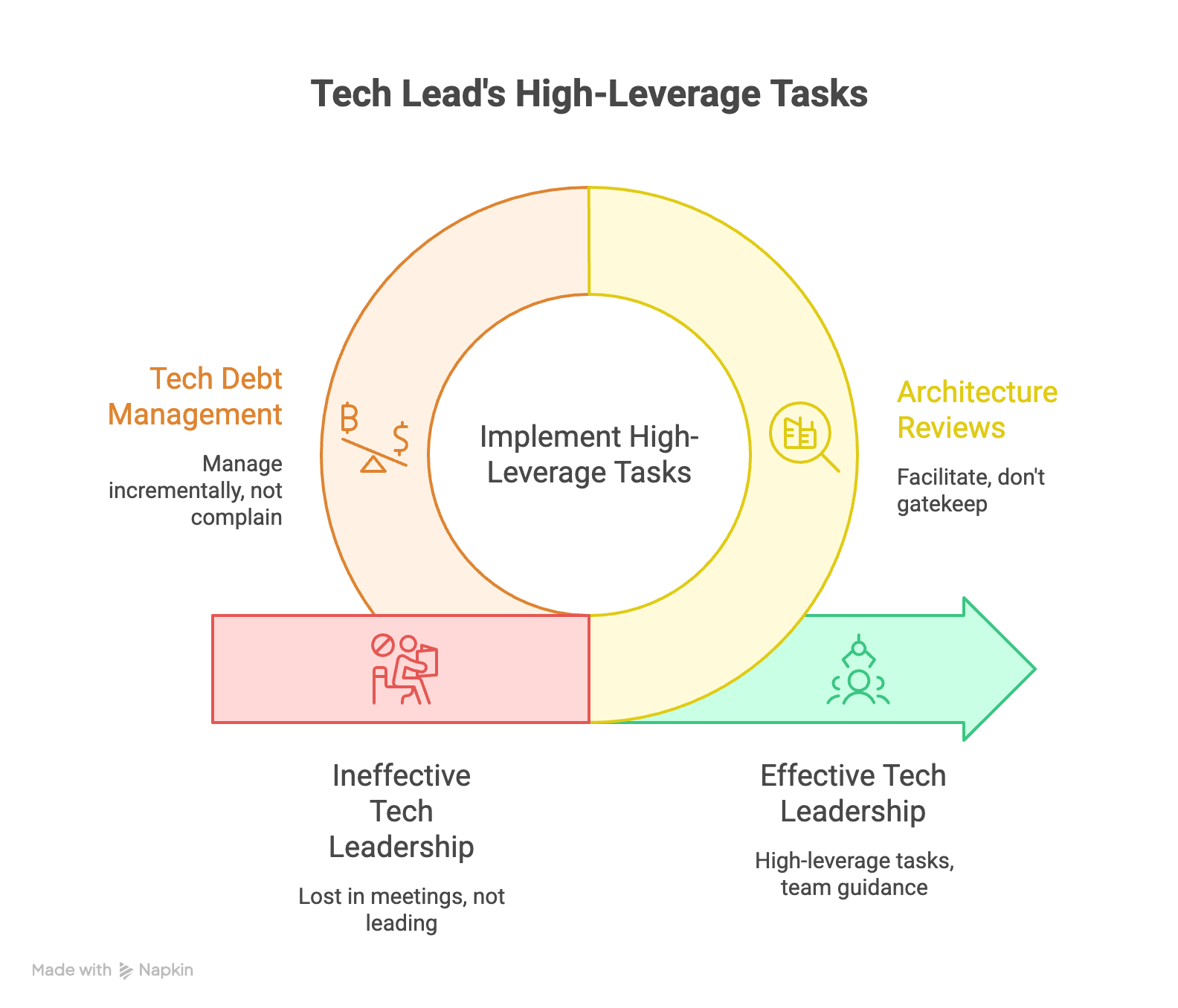
When you master architecture reviews and debt management, you aren’t just “coding”; you are building an environment where everyone else can code better.
I’d love to hear your thoughts!
Which of these two tasks do you find more challenging: defending “Refactoring Time” to your manager, or giving feedback on a peer’s architecture without sounding like a “hater”?
Drop a comment below. Let’s build a better engineering culture together!
Stay optimistic and keep building.
Thanks for your support and feedback, I really appreciate it!
You’re the best! 🖖🏼
𝘐𝘧 𝘺𝘰𝘶 𝘦𝘯𝘫𝘰𝘺𝘦𝘥 𝘵𝘩𝘪𝘴 𝘱𝘰𝘴𝘵, 𝘵𝘩𝘦𝘯 𝘤𝘭𝘪𝘤𝘬 𝘵𝘩𝘦 💜. 𝘐𝘵 𝘩𝘦𝘭𝘱𝘴!
𝘐𝘧 𝘺𝘰𝘶 𝘬𝘯𝘰𝘸 𝘴𝘰𝘮𝘦𝘰𝘯𝘦 𝘦𝘭𝘴𝘦 𝘸𝘪𝘭𝘭 𝘣𝘦𝘯𝘦𝘧𝘪𝘵 𝘧𝘳𝘰𝘮 𝘵𝘩𝘪𝘴, ♻️ 𝘴𝘩𝘢𝘳𝘦 𝘵𝘩𝘪𝘴